(This English version is intended only as a translation. Only the original version in Japanese is valid.) last updated:25 March 2024
 大東流合気柔術・居合術 | 神刀柔進会 | 合気柔術静岡
About Mugen Shintō-ryū Iaijutsu
Line of Transmission:
Aizu Shintō Seiburyū
•Ogasawara Jōnosuke Nagamasa (小笠原城ノ助長政)
•Kamio Bōshō (神尾房祥)
•Ibuka Kurando (井深蔵人)
•Hashima Minamoto Tazaemon (羽島源太左衛門)
•Nagasaka Gengo (長坂源吾)
•Takeda Sōemon (武田惣右衛門)
•Takeda Sōkaku Masayoshi (武田惣角正義)
•Yamamoto Ittōsai Kakuyoshi (山本一刀斉角義)
Aizu Ono-ha Ittō-ryū
•Itō Ittōsai Kagehisa (伊東一刀斉景久)
•Ono Jirōemon Tadaaki (小野次郎衛門忠明)
(Transmitted to Aizu by Lord Hoshina Masayuki (保科正之公) (see note))
•Ōtake Gakubee, 13th-generation head of Ono-ha Ittō-ryū (一刀流小野派十三代大竹学兵衛)
•Shibuya Tōma Sadayasu (渋谷東馬貞保), Aizu Domain swordsmanship instructor in the late Edo period (Shihan: Takeda Zenjurō 武田善十郎)
•Takeda Sōkaku Masayoshi (武田惣角正義) in 1869
•Yamamoto Ittōsai Kakuyoshi (山本一刀斉角義)
•Nagao Zenyū Ittōsai Kakuzan (長尾全祐一刀斉角全)
•Hiraoka Ittōsai Yasuhide (平岡一刀斉祥淑)
Note: Shibuya Tōma, Swordsmanship Instructor of the Aizu Domain was the third son of Namae Kanryū (名江寛隆), the Aizu domain physician, and was adopted into the Shibuya family. He was born on October 13, 1832 and passed away at the age of 73 on May 6, 1904.
Daitō-ryū Aiki-jūjutsu Yamamoto Kakuyoshi-ha
•Advisor and guide: Karōsaigō Tanomo (家老西郷頼母)
•1898: Takeda Sōkaku Masayoshi (武田惣角正義)
•Yamamoto Ittōsai Kakuyoshi (山本一刀斉角義)
•Nagao Zenyū Ittōsai Kakuzan (長尾全祐一刀斉角全)
•Hiraoka Ittōsai Yasuhide (平岡一刀斉祥淑)
Mugen Shintō-ryū Iaijutsu
Yamamoto Ittōsai Kakuyoshi(山本一刀斉角義) (founder)
Nagao Zenyū Ittōsai Kakuzan(長尾全祐一刀斉角全)
Hiraoka Ittōsai Yasuhide(平岡一刀斉祥淑)
The founder, Yamamoto Kakuyoshi, was granted the position of assistant instructor by Takeda Sōkaku Minamoto Masayoshi in July of 1941, which was recorded in Eimeiroku, the register of students. In May of 1942, he received the Secret Transmission of the Inner Mysteries of Daitō-ryū Aiki-jūjutsu, also referred to as the Ōmenjō(大免状), and was taught the inner secrets of Daitō-ryū Jūjutsu. As the successor of Daitō-ryū Jūjutsu, he was permitted by his teacher to bear the name of General Headmaster(総主) of Daitō-ryū Jūjutsu, and he received the two characters: Kaku from Sōkaku and Yoshi from Masayoshi, thus assuming the name Yamamoto Kakuyoshi.
At that time, he was also entrusted with a purple haori cord and a katana (Yukihira, 行平)—a single sword—which had been bestowed upon the Takeda family by Lord Matsudaira Katamori(松平容保公).
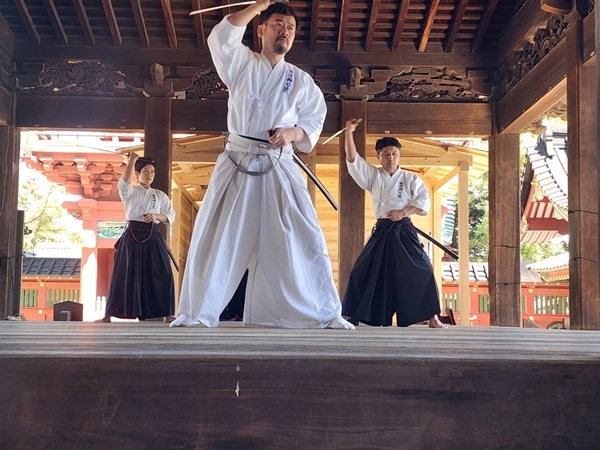
After the passing of his teacher Sōkaku, he applied his own originality to the Daitō-ryū Jūjutsu hand-sword (tegatana, 手刀), and, integrating what he had learned from Sōkaku, he founded a new iai art that unified sword and jūjutsu—ken-jū ittai(剣柔一体). This art is based on Ono-ha Ittō-ryū Kenjutsu(小野派一刀流剣術) and Shintō Seiburyū(神道精武流), one of the five martial schools of Aizu(会津五流). This iai art was named Mugen Shintō-ryū Iaijutsu(無限神刀流居合術), and from that time on, Yamamoto Kakuyoshi took the name Ittōsai.
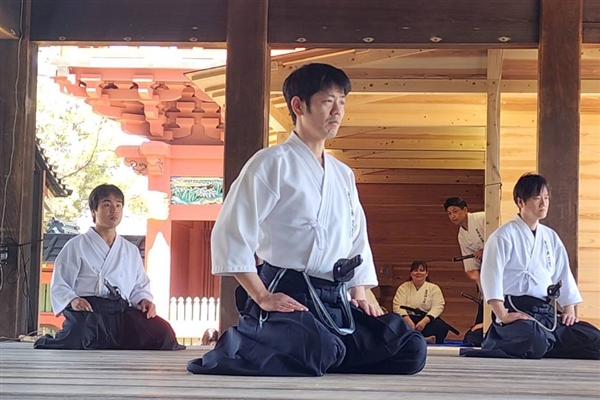
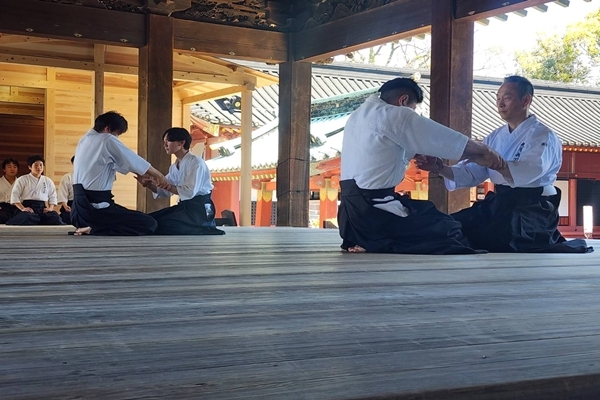
Since this iai is a unified art of sword and jūjutsu, it differs from the parallel-foot stance of kendō, and incorporates the body movement of Daitō-ryū Jūjutsu, specifically the tsuimoku-style footwork, forming a method that always considers and controls the opponent’s motion. The techniques are broadly divided into seated techniques, half-standing techniques, standing techniques, and also include inner (advanced) iai. The true essence of this art can only be grasped by those who have undergone rigorous training in Daitō-ryū Jūjutsu.
In 1977, Yamamoto Kakuyoshi joined the Nihon Kobudō Shinkōkai(日本古武道振興会, Japan Kobudō Promotion Society) at their request, and there he developed close friendships with various instructors, including Ōtsubo Shihō(大坪指方), instructor of Shinkage-ryū(新陰流), Mutō Masao(武藤正雄), instructor of Yagyū Shingan-ryū Taijutsu(柳生新巌流体術), Ōtsuka Hiroki(大塚博紀), instructor of Wadō-ryū Karate-dō(和道流空手道), Saitō Satoshi(斉藤聰), instructor of Negishi-ryū Shurikenjutsu(根岸流手裏剣術), and Kanno Hisashi(菅野久), instructor of Shinkage-ryū Jūjutsu(真蔭流柔術). Under Yamamoto Kakuyoshi, Mugen Shintō-ryū Iaijutsu(無限神刀流居合術)included both Ono-ha Ittō-ryū Kenjutsu(小野派一刀流剣術, sword techniques) and bōjutsu(棒術, staff techniques). However later, under Sōshu Nagao Zenyū(宗主長尾全祐), Aizu Domain-style Ono-ha Ittō-ryū Kenjutsu(会津藩伝継小野派一刀流剣術) was separated and organized as an independent system. Today, instruction is offered in three distinct styles:
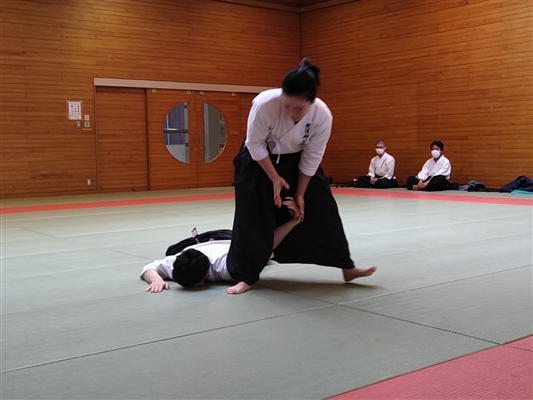
•Daitō-ryū Aiki-jūjutsu Yamamoto Kakuyoshi-ha(大東流合気柔術山本角義派)
•Mugen Shintō-ryū Iaijutsu(無限神刀流居合術)
•Aizu Domain-style Ono-ha Ittō-ryū Kenjutsu(会津藩伝継小野派一刀流剣術)
Yamamoto Kakuyoshi was born on March 3, 1914 in Akita Prefecture. Around 1937, he became acquainted with Takeda Sōkaku, General Affairs Director of Daitō-ryū Aiki-jūjutsu, who at the time was residing at the home of Sasaki Hyōgo in Takikawa. Deeply impressed by Sōkaku's techniques, he began studying Daitō-ryū Aiki-jūjutsu. In July of 1941, he became an assistant instructor(教授代理) of Daitō-ryū Aiki-jūjutsu. In May of 1942, he received the Secret Transmission of the Inner Mysteries of Daitō-ryū Aiki-jūjutsu(秘伝奥義之事), also referred to as the Ōmenjō(大免状). In the same year, he was granted a katana (referred to as Yukihira, 行平) from Takeda Sōkaku, as well as the two characters "角" (Kaku) and "義" (Yoshi) to form his name. He was also entrusted with a large purple haori cord(紫の大羽織紐), which had been granted from the Takeda family by Lord Matsudaira Katamori(松平容保公), lord of the Aizu domain.
Iai Forms(居合の形):
•Shoden(初伝): 13 seated techniques(座技13本)
•Chūden(中伝): 11 half-standing techniques(半立技11本)
•Okuden(奥伝): 17 standing techniques(立技17本)
•Taitō taijutsu(帯刀体術) / Zanpō jitsugi(斬法実技): 12 techniques(12本)